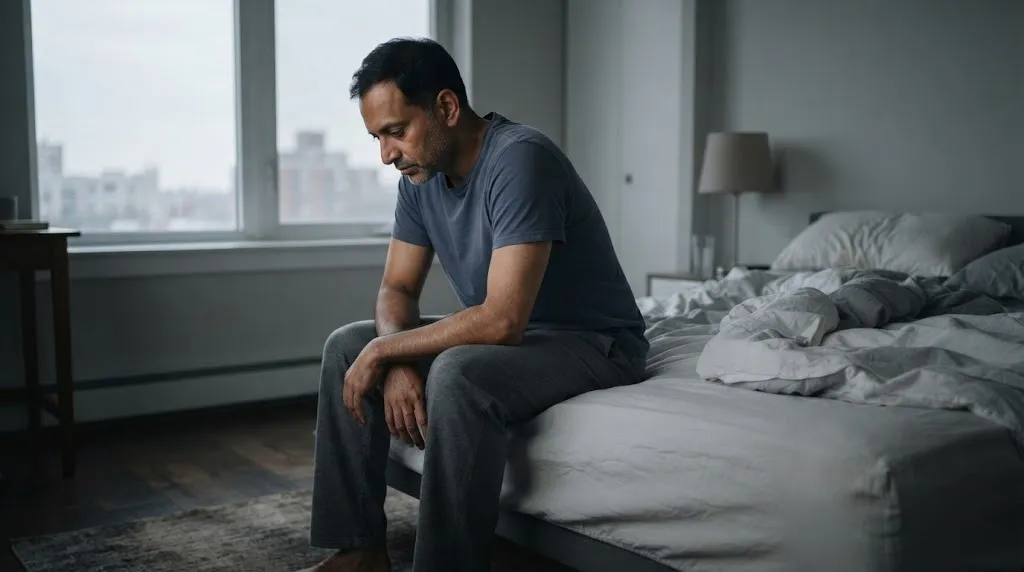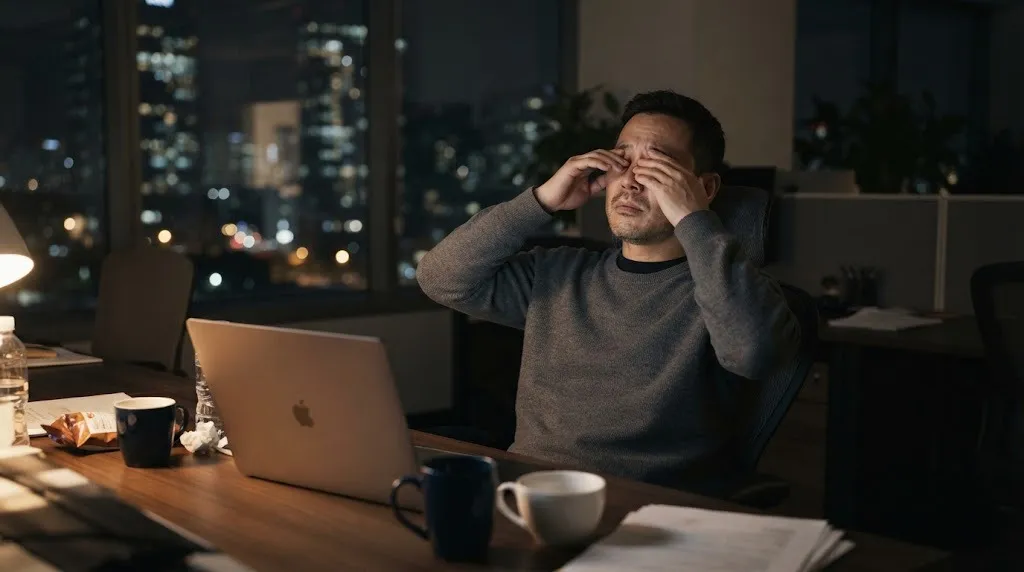

Alcohol and depression feed each other. A few drinks can take the edge off for an evening, but over time heavy drinking tends to make low mood, anxiety and sleep worse, and feeling worse makes the next drink more tempting. A few drinks becomes a problem when you drink more than you planned, you rely on it to cope, or it starts costing you sleep, relationships or peace of mind.
If you've wondered whether your drinking has crossed a line, that question is worth listening to. Asking it doesn't make you weak. It means you're paying attention.
Key takeaways
- Alcohol problems and depression often show up together, and each can make the other worse.
- NIAAA defines heavy drinking for men as 5 or more drinks on any day, or 15 or more in a week.
- Drinking to calm anxiety can backfire: short-term relief, more anxiety over time.
- An honest self-check and a 30-day reset can show you where you stand.
- Help is free and confidential: SAMHSA's National Helpline is 1-800-662-4357, 24/7.
How are alcohol and depression connected?
According to the National Institute on Alcohol Abuse and Alcoholism (NIAAA), alcohol use disorder and other mental health conditions "can both cause and worsen each other." NIAAA reports that among people with major depression, between 27% and 40% have had alcohol use disorder at some point in their lives.
It works like a loop. You feel flat or wound up, so you drink. The drinks quiet things for a few hours, but they don't fix what's underneath. Then the poor sleep, the rough morning and the things you said or skipped pile onto what was already heavy.
Anxiety and the "it helps me relax" trap
NIAAA notes that alcohol may seem to relieve anxiety in the short term, but over time heavy drinking and repeated withdrawal can push anxiety and problem drinking higher together. Among people treated for anxiety disorders, NIAAA puts the rate of alcohol use disorder at 20% to 40%.
Sleep takes a hit too
A nightcap might knock you out, but it doesn't buy good sleep. NIAAA reports that sleep problems are very common among people with alcohol use disorder, and that sleep can take 30 or more days without alcohol to recover. Bad sleep on its own can drag your mood down.
How much drinking is too much for a man?
In the US, NIAAA defines a standard drink as any drink containing 0.6 fluid ounces (14 grams) of pure alcohol. A strong craft beer or a heavy pour can easily count as more than one.
- Binge drinking (men): about 5 or more drinks in roughly two hours.
- Heavy drinking (men): 5 or more drinks on any day, or 15 or more per week.
NIAAA also points out that harm can come with any amount of drinking, and the risk rises as the amount goes up. The stakes are real. According to the CDC (2024), excessive drinking caused about 178,000 US deaths a year in 2020 and 2021, including about 119,600 boys and men.
What are the signs a few drinks has become a problem?
Doctors use a set of questions to check for alcohol use disorder. Here's a plain-English version adapted from NIAAA. In the past year, have you:
- Ended up drinking more, or for longer, than you meant to?
- Wanted to cut back, or tried to, and couldn't?
- Kept drinking even though it made you feel depressed or anxious?
- Kept drinking even though it caused trouble with family or friends?
- Let drinking, or being sick from it, get in the way of work or home?
- Given up things you used to enjoy so you could drink?
- Needed more drinks to get the same effect?
- Felt shaky, sweaty, restless, low or unable to sleep as the alcohol wore off?
NIAAA says any of these may be cause for concern, and the more you check, the more urgent the need for change. Clinicians rate it as mild (two to three signs), moderate (four to five) or severe (six or more).
Watch for the quieter signs too: drinking alone to switch off, needing a drink to fall asleep, playing down how much you had, or feeling worse the next day than the drinks were worth.
Why do so many men drink to cope?
For a lot of men, a beer after work is the one socially accepted way to decompress. Nobody asks questions. The CDC notes that some people drink more when they're dealing with stress, loneliness, isolation or mental health conditions.
If drinking has become your main tool for handling hard feelings, it may be covering something that deserves real attention. Our guides on depression in men and practical anxiety tips are good next reads.
How do I cut back on drinking? A 30-day reset
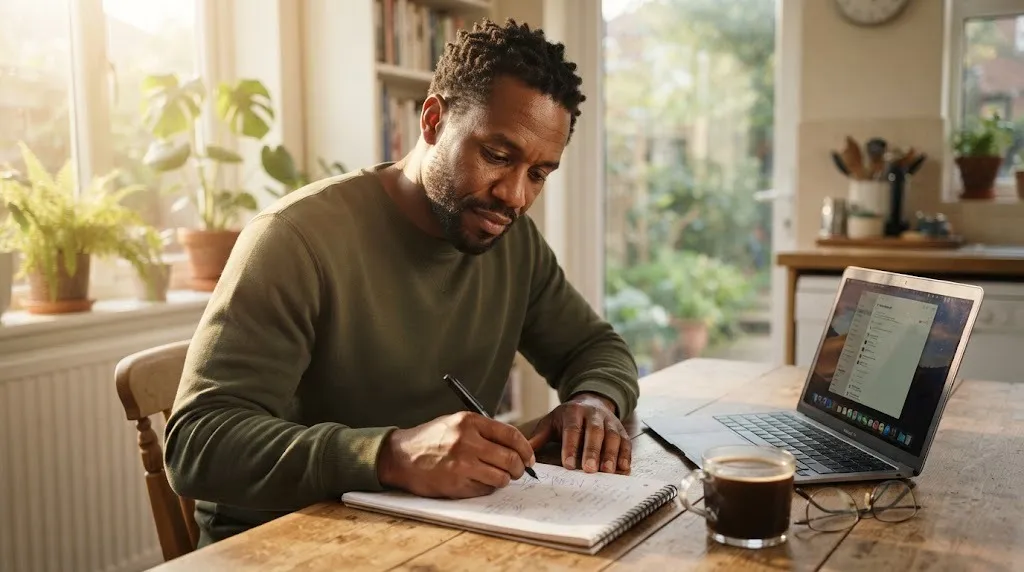
- Count honestly for one week. Write down every drink, including the ones that "don't count." NIAAA's free Rethinking Drinking site has calculators and tools to help you see your pattern.
- Pick a clear goal. For example: alcohol-free Monday to Thursday, and no more than two drinks on any other day. Or take 30 days off completely and see how you feel.
- Replace the ritual, not just the drink. The 6 p.m. beer is often about the switch from work to home. Swap in a walk, a shower, a call, or a cold non-alcoholic drink in the same glass.
- Have your line ready. "I'm good tonight, I'm driving." "Taking a month off, I sleep better." "I'll grab a soda." Keep it short. No one needs a speech.
- Tell one person. Say it out loud to a friend or partner: "I'm cutting back for a while. Ask me how it's going."
- Track your mood and sleep. NIAAA notes that stopping drinking on its own often leads to improvement in co-occurring mental health problems. Give it a few weeks before you judge.
A safety note: if you've been drinking heavily every day for a long time, don't stop suddenly without talking to a doctor first. NIAAA warns that alcohol withdrawal can be life-threatening, and a doctor can make it safer.
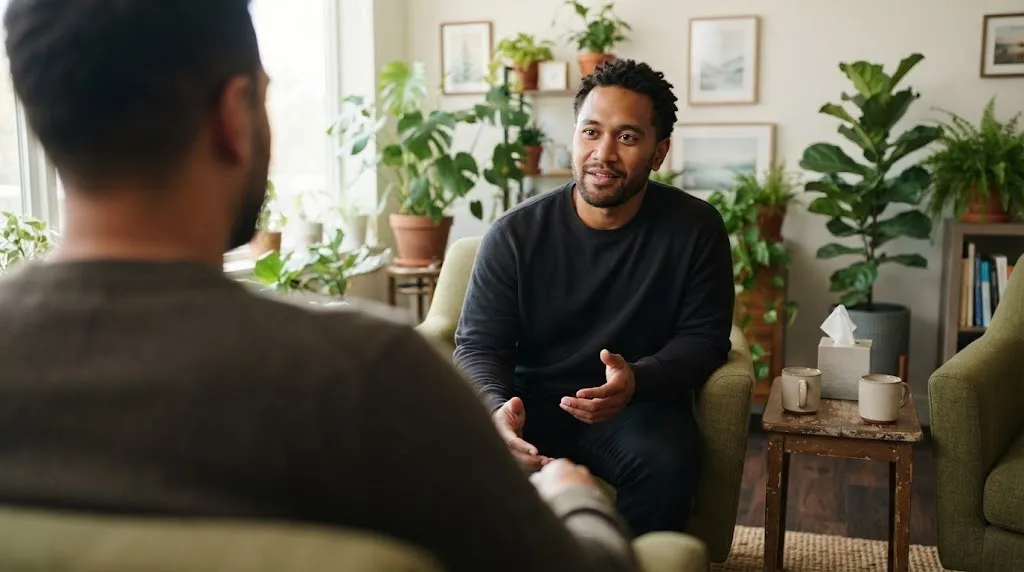
What does treatment for an alcohol problem look like?
You don't have to hit "rock bottom" to get help. NIAAA describes three main paths, which are often combined:
- Talk therapy with a licensed professional, focused on changing drinking habits and building coping skills.
- Medication. There are three FDA-approved, non-addictive medications a doctor can talk through with you.
- Mutual-support groups, in person or online, usually free or low cost.
NIAAA is clear that many people with alcohol use disorder do recover. To get started, call SAMHSA's National Helpline at 1-800-662-4357 (free, confidential, 24/7), text your ZIP code to 435748, or search FindTreatment.gov. Our guide on how to find a therapist walks through the rest.
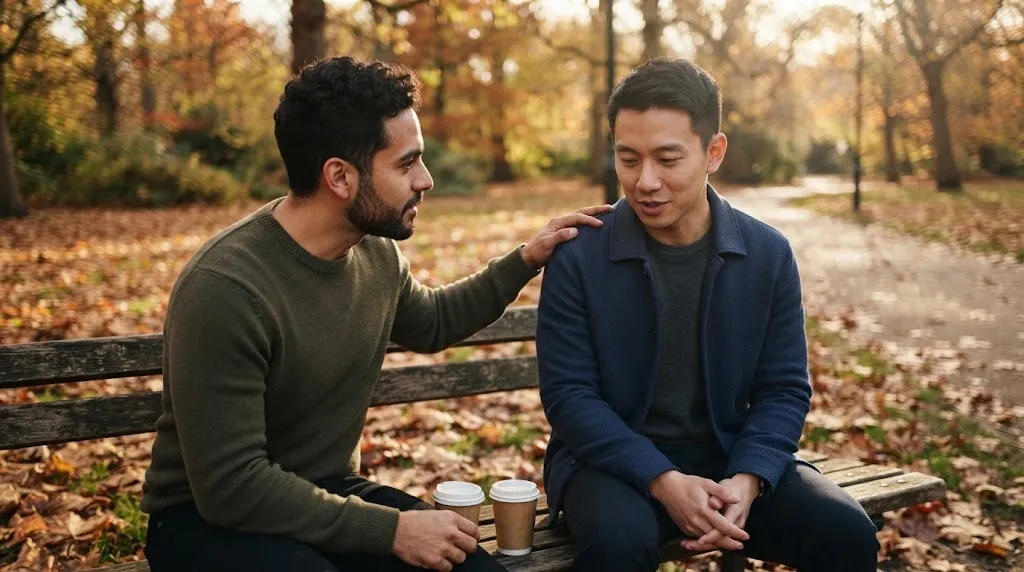
How do I talk to a friend who's drinking too much?
Pick a sober, private moment. Lead with care, not a verdict: "Hey, I've noticed you've been drinking a lot more since the layoff. I'm not judging. I just care about you. How are you really doing?" Then listen. For more, see how to check on a friend.
Changing a habit is easier with a reminder in plain sight. If that helps, our Mental Health collection carries lines like "Strong Men Ask for Help" on a hat or wallet. It won't do the work for you, but it can be a nudge on the hard nights, or start a conversation with someone who's been there.
Frequently asked questions
Can alcohol cause depression?
NIAAA says alcohol use disorder and other mental health conditions can both cause and worsen each other. Sometimes depression comes first, sometimes drinking does. A professional can help sort it out, often by looking at how your mood is during alcohol-free stretches.
Is drinking every night a problem?
It depends on how much and why. NIAAA's heavy-drinking line for men is 5 or more drinks on any day or 15 or more a week. If you need a drink every night to unwind or sleep, that's worth a closer look even if the numbers are lower.
How long after I stop drinking will I feel better?
It varies. NIAAA notes that quitting often improves co-occurring mental health problems, and that sleep can take 30 or more alcohol-free days to recover. If your mood stays low after a few weeks, talk to a doctor.
Is it safe to just quit cold turkey?
For many light or moderate drinkers, yes. But if you've been drinking heavily for a long time, withdrawal can be dangerous. Talk to a doctor before you stop.
If you're struggling, talk to a doctor or counselor. In the US you can call or text 988 any time to reach the Suicide & Crisis Lifeline (chat at 988lifeline.org). Veterans: dial 988 then press 1. If you're in immediate danger, call 911.
Alcohol or drug concerns: SAMHSA National Helpline, 1-800-662-4357 (free, confidential, 24/7). Prefer to text? Text HOME to 741741 to reach Crisis Text Line.
Sources
- NIAAA: Mental Health Issues: Alcohol Use Disorder and Common Co-occurring Conditions
- NIAAA: Understanding Alcohol Drinking Patterns
- NIAAA: Understanding Alcohol Use Disorder
- NIAAA: Rethinking Drinking
- CDC: Facts About U.S. Deaths from Excessive Alcohol Use (2024)
- SAMHSA: National Helpline
- Crisis Text Line
This article is general information, not medical or mental health advice.