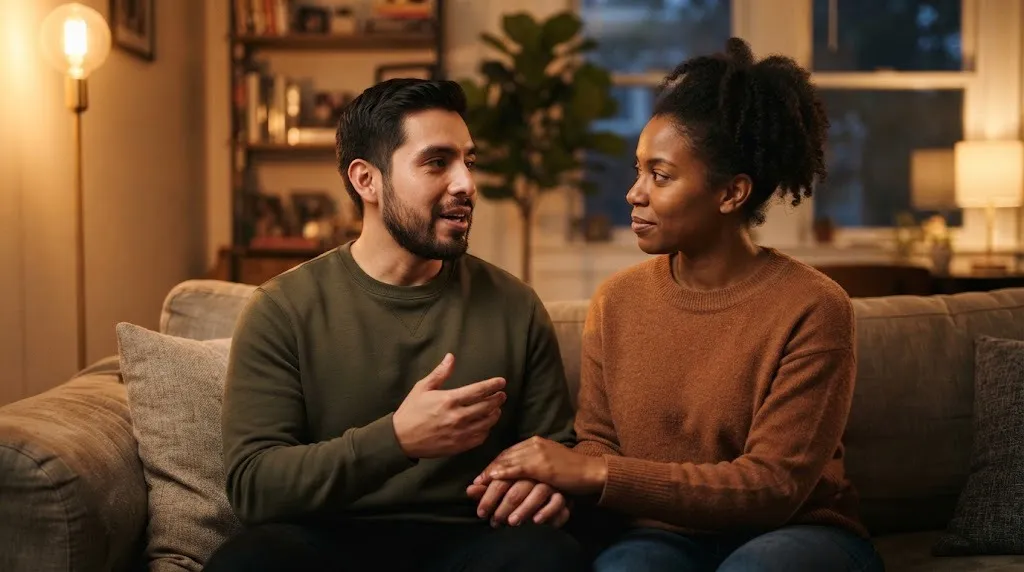

To make friends as an adult man, pick one or two places you'll show up to on repeat, say yes more often than feels natural, and be the one who suggests the next hangout. Friendship mostly comes down to time: one University of Kansas study estimated it takes about 50 hours together to go from acquaintance to casual friend, and more than 200 hours to become close friends.
If your circle has shrunk to your partner, your coworkers and a group chat that's gone quiet, you're not broken and you're not alone. Plenty of the guys you'll meet are in the same spot and would be glad someone made the first move.
Key takeaways
- Fewer men have close friends than a generation ago, so if it feels hard, that's not just you.
- Friendship is built with repeated time together, not one great conversation.
- Recurring activities (a league, a class, a club) do most of the heavy lifting.
- The awkward part is a specific invite. Scripts below make it easy.
- Connection is good for your health, not just your weekends.
Why is it so hard for men to make friends as adults?
As kids, friendship came built in: school, teams, the neighborhood. As adults, that structure disappears. Work, kids, moves and long commutes eat the time, and many men were never taught how to start a friendship on purpose.
The numbers back this up. According to the Survey Center on American Life (2021), the share of men with no close friends rose from 3% in 1990 to 15% in 2021. Over the same period, the share of men with at least six close friends fell from 55% to 27%.
The same research found that only 21% of men said they'd received emotional support from a friend in the past week, compared with 41% of women. Many men have buddies to watch the game with, but nobody to call when things fall apart.
Why do friendships matter for your mental health?
Friends aren't a luxury. According to the US Surgeon General's advisory on social connection, social isolation raises the risk of dying early by 29%, and adults who often feel lonely are more than twice as likely to develop depression as those who rarely or never do.
Good friends give you someone to laugh with, someone to tell the truth to, and someone who notices when you're off. If you're older and feeling this gap, our guide to loneliness in older men goes deeper.
Where can men meet new friends?
The best places share three things: the same people, the same time, and something to do side by side. Look for anything that repeats weekly.
- Rec sports: a softball, basketball, soccer or kickball league, or a regular pickup game.
- Training groups: a run club, a climbing gym, a martial arts class, a CrossFit box.
- Hands-on classes: woodworking, welding, cooking, a trade or language course.
- Volunteering: coaching youth sports, a food bank shift, a habitat build.
- Faith communities: men's groups, service teams, a weekly breakfast.
- Your own street: neighbors, other dads at practice, the regulars at your gym.
- Work: the Survey Center found that 54% of Americans with close friends met at least one at their own or their spouse's workplace.
One catch: the Kansas research found that hours spent working together count far less than time spent hanging out, joking around or playing games. So turn a coworker into a friend by seeing him outside the job.
How do you ask a guy to hang out without it being weird?
It's only weird if it's vague. Make the invite specific, low-pressure and tied to something you're already doing.
Scripts that work
- After a few good conversations: "A few of us grab a beer after the game Thursday. You in?"
- Get the number: "We should do this again. What's your number? I'll text you next time I go."
- Shared interest: "I'm hitting the range Saturday morning. Want to come?"
- The follow-up text (within a week): "Good talking Saturday. Same time next week?"
Then become the planner. Most men are happy to come along but rarely organize. Start something that repeats: a monthly poker night, a Tuesday breakfast, a Sunday morning ride. A standing plan removes the "we should hang out sometime" that never happens.
How do you go deeper than sports and work talk?
Closeness grows when someone shares a little and the other person meets them there. You don't need a heart-to-heart on day one. Try this:
- Ask a second question. "How's work?" "Fine." "Still dealing with that new boss?"
- Share one true thing. "Honestly, it's been a rough month with my dad's health."
- Talk side by side. Many men open up more in the truck, on a hike or at the grill than face to face.
- Say the quiet part. The Survey Center found only 25% of men had told a friend they loved them in the past week. "Glad you're around, man" counts.
When a friend seems off, don't wait for him to bring it up. Our guide on how to check on a friend has words you can use.
What if you've moved, divorced or lost your old crew?
Start with the friends you already had. Reconnecting is often easier than starting from zero, because the history is already there. Send three texts this week:
- "Saw this and thought of you. How've you been?"
- "It's been way too long. Free for a call this weekend?"
- "I'm passing through your area next month. Lunch?"
Not everyone will answer. That's normal and it's not personal. People are busy. One or two will, and that's a start.
A simple 30-day plan to make friends
- Week 1: Join one recurring thing and commit to going four times.
- Week 2: Send three reconnect texts to old friends.
- Week 3: Make one specific invite to someone you've met.
- Week 4: Put something recurring on the calendar with at least one person.
Expect it to take months, not days. As Kansas researcher Jeffrey Hall put it, "You can't snap your fingers and make a friend." Keep showing up.
Sometimes the thing that starts a conversation is as simple as what's on your hat. Our Mental Health collection includes "Not Weak. Human.", a small daily reminder that being the friend who reaches out first is just being human.
Frequently asked questions
Is it normal for a man to have no close friends?
It's more common than most people think. The Survey Center on American Life found 15% of men reported no close friends in 2021. Common doesn't mean it has to stay that way, and it's very fixable with time and effort.
How long does it take to make a friend as an adult?
The University of Kansas research estimated roughly 50 hours together to become casual friends, around 90 hours to become friends, and more than 200 hours to become close friends. Weekly activities get you there faster than occasional big plans.
Where can I meet friends in my 30s or 40s?
Anywhere you'll see the same people every week: a rec league, a gym class, a volunteer crew, a faith group or other parents at your kids' practices. Consistency matters more than the activity.
What if I'm too anxious to put myself out there?
Start with low-stakes settings where there's something to do, so talking isn't the whole point. If anxiety is keeping you from people most of the time, it's worth talking to a doctor or counselor about it.
If you're struggling, talk to a doctor or counselor. In the US you can call or text 988 any time to reach the Suicide & Crisis Lifeline (chat at 988lifeline.org). Veterans: dial 988 then press 1. If you're in immediate danger, call 911.
Sources
- Survey Center on American Life: American Men Suffer a Friendship Recession (Daniel A. Cox, 2021)
- Survey Center on American Life: The State of American Friendship (2021)
- University of Kansas: Study reveals number of hours it takes to make a friend (Jeffrey Hall, 2018)
- U.S. Surgeon General (HHS): Social Connection advisory and fact cards
- 988 Suicide & Crisis Lifeline
This article is general information, not medical or mental health advice.