
To open up emotionally to your partner, start small and specific: pick a calm moment, name one feeling in plain words ("I've been stressed about work"), and say what you need ("I just want you to listen"). You don't need a big speech or perfect words. Opening up is a skill you build in small reps, not a personality you're born with.
If you're not a "feelings guy," that's okay. Maybe you grew up in a house where nobody talked about this stuff, or where staying quiet kept the peace. Your partner probably doesn't want a different man. They want to know the one they've got.
Key takeaways
- Opening up is a learnable skill. Start with one feeling and one need.
- Small moments of connection matter more than big talks. Gottman research ties them to lasting relationships.
- How you start a hard conversation shapes how it goes. Lead with "I," not "you."
- If you shut down when things get heated, take a real break of at least 20 minutes, then come back.
- If what's under the surface feels heavy or dark, talk to a counselor too, not only your partner.
Why is it so hard for men to open up emotionally?
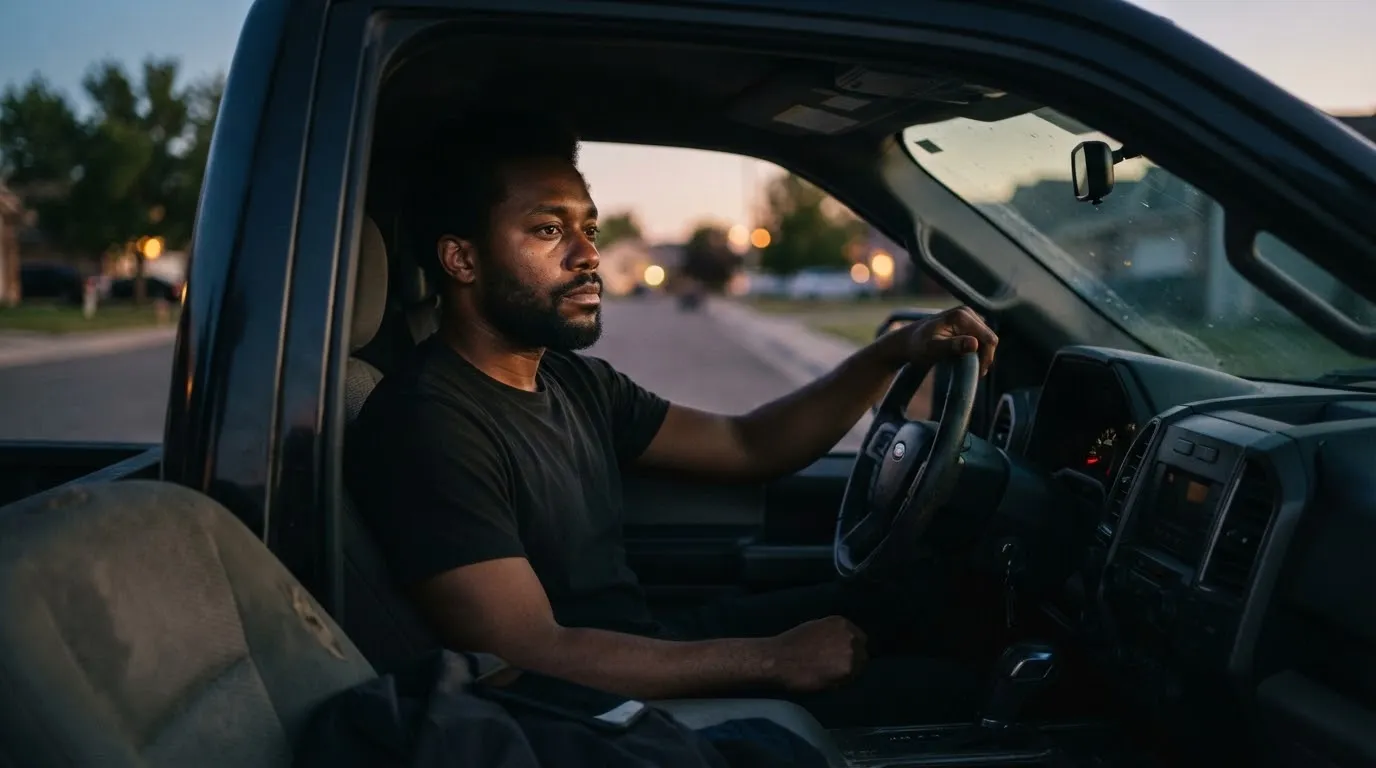
A lot of men learned early that feelings were something to handle alone. Crying got teased. Worry got a "toughen up." So you got good at keeping it together, and now the skill you used to survive is the thing keeping your partner at arm's length.
There's also a body piece. When a conversation gets tense, many men feel their heart pound and their thoughts go blank, so they go quiet to stop things from blowing up. The Gottman Institute calls this "stonewalling," when the listener withdraws, shuts down and closes off from the speaker. According to the Gottman Institute, men are consistently more likely to stonewall than women, and 85% of the stonewallers studied in their "Love Lab" were men.
Going quiet isn't the same as not caring. But to your partner, silence can feel like rejection. Learning to open up is how you close that gap.
What does "opening up" actually look like?
It doesn't mean pouring out your whole life story. It usually looks like one of these:
- Saying what kind of day you had, beyond "fine"
- Naming a worry before it turns into irritability
- Admitting you don't know what to do about something
- Telling your partner what you appreciate about them
- Asking for something you need, like quiet time, a hug or help
If you only remember one thing: name the feeling, then name the need.
How do you start the conversation without it turning into a fight?
The first few minutes matter a lot. According to the Gottman Institute, a six-year study was able to predict the likelihood of a couple's divorce by watching just the first three minutes of a conflict discussion. Gottman calls the better approach a "softened startup": talk about your own feelings and needs with "I" statements, not about your partner's faults.
Use this simple formula
"I feel [one word] about [the situation]. What I need is [one clear thing]."
Examples:
- "I feel stressed about money this month. What I need is for us to sit down Sunday and look at the budget together."
- "I feel shut out when we're both on our phones all night. What I need is 20 minutes to just talk after the kids are down."
- "I feel worn out and I've been short with you. I'm sorry. What I need is a quiet hour Saturday morning."
Pick the right moment
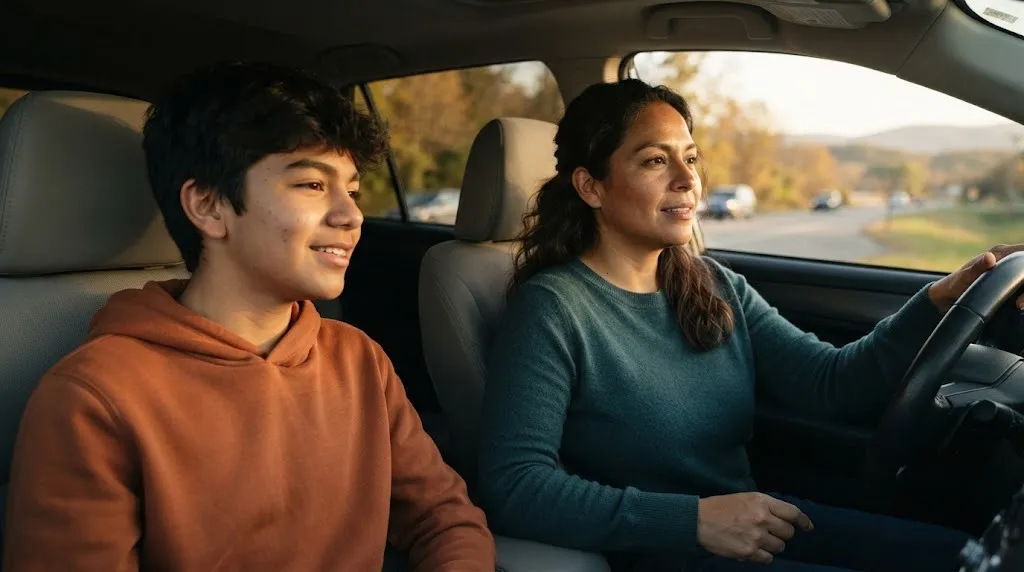
Not in the middle of an argument. Not when one of you is walking out the door. Try a car ride, a walk or the dishes. Side-by-side often feels easier than face-to-face for men.
If words won't come, try an opener
- "I'm not great at this, but I want to try telling you something."
- "Can I talk through something without you fixing it? I just need you to hear me."
- "Something's been on my mind and I don't fully know how to say it yet."
Why do small moments of connection matter so much?
Big heart-to-hearts are great, but daily small moments do most of the work. Gottman calls them "bids": a comment, a question, a hand on the shoulder, a "look at this." You can turn toward a bid (respond), turn away (ignore it) or turn against it (snap).
According to the Gottman Institute, in a study of newlyweds followed for six years, couples who stayed married turned toward each other's bids 86% of the time. Couples who divorced did so only 33% of the time.
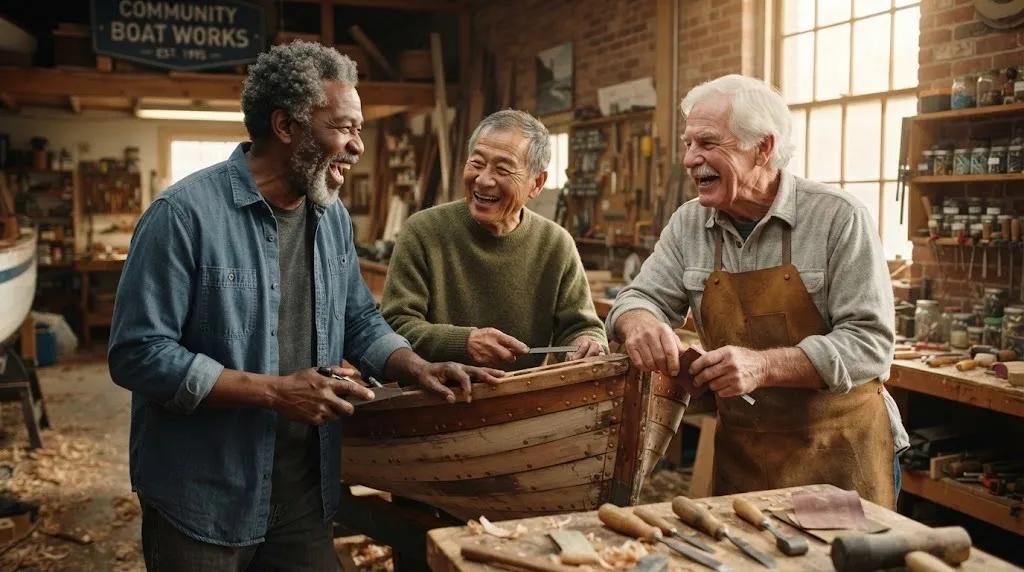
That's good news for a guy who isn't a big talker. Opening up can start with simply noticing bids and answering them:
- When your partner says "I had the weirdest day," put the phone down and ask, "What happened?"
- Make one bid of your own each day: "Can I tell you what's bugging me at work?"
- Share one honest thing at dinner, even something small: "Today was rough, but the drive home helped."
What should you do if you shut down mid-conversation?
It happens. The goal isn't to never shut down. It's to shut down out loud, instead of just going silent.
- Notice the signs. Racing heart, hot face, mind going blank, wanting to leave.
- Call a timeout kindly. "I'm getting flooded and I don't want to say something I don't mean. Can we take a break and come back in half an hour?"
- Take a real break. The Gottman Institute advises the break last at least 20 minutes so your body can calm down. Walk, breathe slowly or stretch. Don't spend it rehearsing your comeback.
- Come back when you said you would. This is the part that builds trust. A break is not an exit.
If anger is part of what shuts you down, our guide to anger management for men has more tools for the heated moments.
What if what you need to share feels too big?
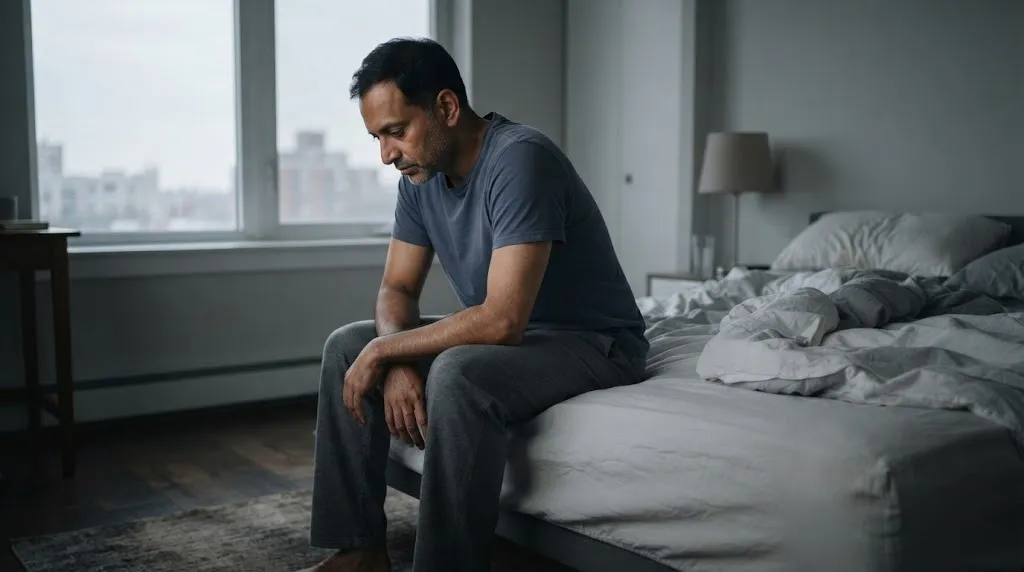
Sometimes the thing under the surface is heavy: depression, grief, a past trauma, drinking, thoughts of not wanting to be here. Your partner can be part of your support, but they shouldn't be all of it. A counselor gives you a place to sort through it first, and can help you find words to share it at home.
If you're not sure where to start, read our no-nonsense guide to finding a therapist. Couples counseling is another option if you both want help talking to each other.
And if you're the partner reading this, try leading with curiosity instead of pressure: "You seem quieter lately. No rush, but I'm here when you want to talk."
Some guys keep a small reminder in plain sight for the days the words get stuck. Our Mental Health collection has statements like "Not Weak. Human." stitched on a hat or engraved on a wallet, an easy nudge to say the thing.
Frequently asked questions
How can I open up emotionally if I don't know what I feel?
Start with your body and simple words. Tight chest, clenched jaw or a short fuse often point to stress, worry or hurt. Pick the closest word, like "stressed," "worried," "sad" or "frustrated," and say that. It gets easier with practice.
Is it weak for a man to be vulnerable with his partner?
No. It takes more strength to say "I'm struggling" than to stay silent. Being honest with your partner usually builds trust and closeness, not less respect.
What if my partner reacts badly when I open up?
One rough reaction doesn't mean it's not worth it. Try telling them what you need ahead of time, like "I just need you to listen." If talking keeps going badly, a couples counselor can help you both. If you ever feel unsafe at home, call the National Domestic Violence Hotline at 1-800-799-7233.
How often should couples have deep conversations?
There's no magic number. Daily small check-ins matter more than a monthly big talk. Ten minutes a day of real attention, with phones down, is a strong place to start.
If you're struggling, talk to a doctor or counselor. In the US you can call or text 988 any time to reach the Suicide & Crisis Lifeline (chat at 988lifeline.org). Veterans: dial 988 then press 1. If you're in immediate danger, call 911.
If you feel unsafe in your relationship, the National Domestic Violence Hotline is available 24/7 at 1-800-799-7233, or text START to 88788.
Sources
- The Gottman Institute: Turn Towards Instead of Away
- The Gottman Institute: The Four Horsemen: Stonewalling
- The Gottman Institute: Softening Startup
- National Domestic Violence Hotline
- 988 Suicide & Crisis Lifeline
- Veterans Crisis Line
This article is general information, not medical or mental health advice.