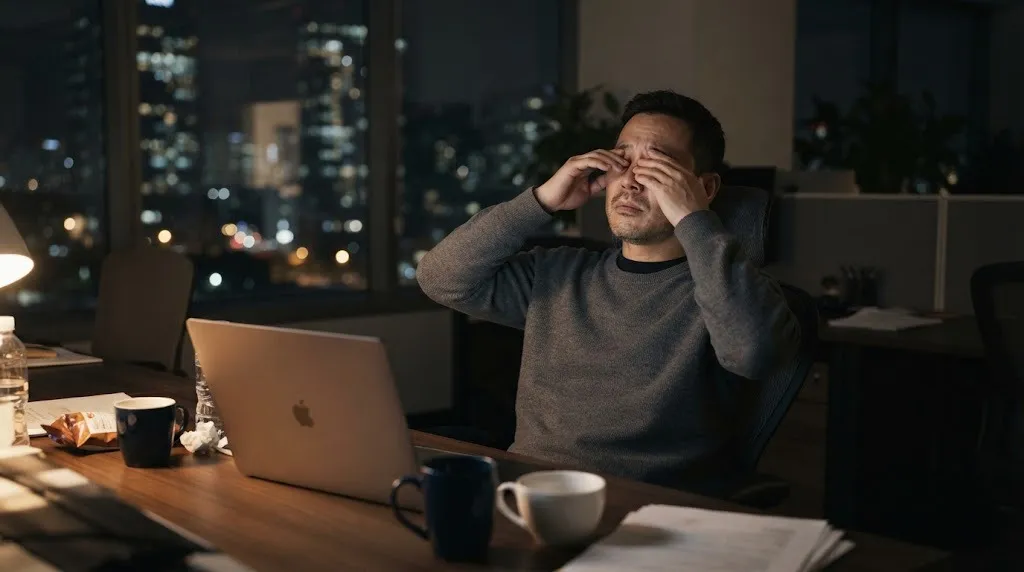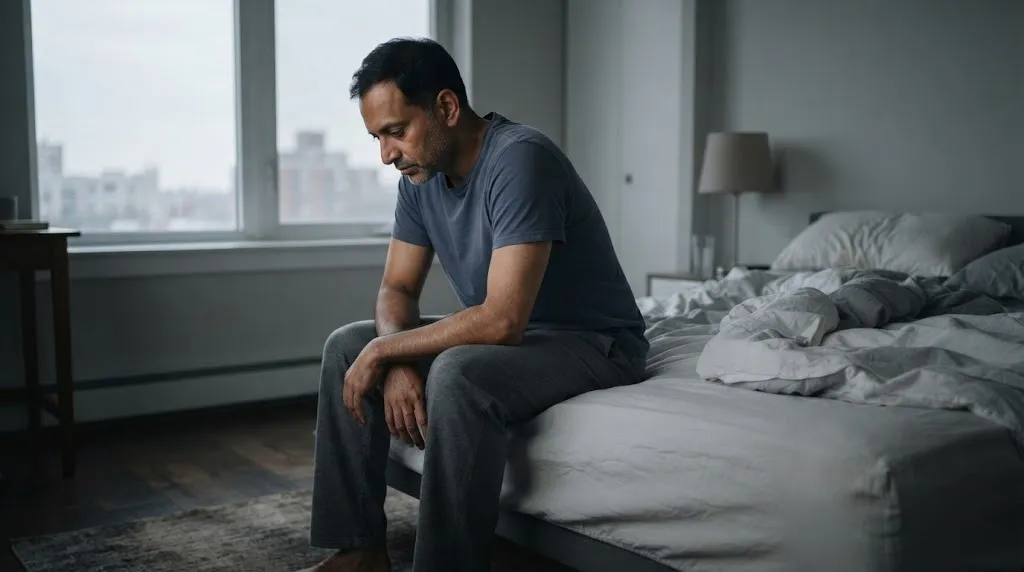

Exercise for mental health works best as part of a simple package: move your body most days, get at least 7 hours of sleep, and keep both on a steady schedule. Research links regular physical activity with a lower risk of depression, even at levels below the official guidelines, and trials show that improving sleep improves mood, anxiety and stress. You don't need a perfect routine. You need a repeatable one.
If you've been stuck in a cycle of bad sleep, no energy and a low mood that makes it hard to work out, you're not lazy. Those three feed each other. The good news is that small changes on the physical side can start to turn the whole cycle around.
Key takeaways
- Even half the recommended amount of exercise is linked to a lower risk of depression.
- The CDC recommends 150 minutes of moderate activity a week plus 2 days of strength work.
- Adults need 7 or more hours of sleep a night, and men are among the groups most likely to fall short.
- Improving sleep led to better mental health in a large review of randomized trials.
- Habits support mental health, but they don't replace professional help when you need it.
How does exercise help mental health?
Movement burns off stress, gives your day structure and gives you a win you can count. The research is strong too.
A 2022 meta-analysis in JAMA Psychiatry led by researchers at the University of Cambridge pooled 15 studies with more than 191,000 adults. Compared with adults who reported no activity, those who got half the recommended amount had an 18% lower risk of depression. Those who hit the full recommended amount had a 25% lower risk. The authors concluded there are significant mental health benefits from being active, even at levels below public health recommendations.
A 2019 JAMA Psychiatry study from Massachusetts General Hospital used genetic data from hundreds of thousands of adults and found evidence that objectively measured physical activity protects against major depression. In short: it's not just that people who feel low move less. Moving more appears to help protect your mood.
How much exercise do you need for your mental health?
According to the CDC, adults should aim for:
- 150 minutes a week of moderate activity, like brisk walking (30 minutes, 5 days a week), or 75 minutes of vigorous activity, like running, or a mix of the two
- Muscle-strengthening activity at least 2 days a week that works all major muscle groups
If that feels like a lot right now, remember the Pearce finding: half the dose still showed real benefit. Start where you are.
A 4-week starter plan
- Week 1: Walk 15 minutes a day, 5 days. That's it.
- Week 2: Walk 20 minutes, 5 days. Add 10 minutes of bodyweight moves twice (push-ups, squats, lunges).
- Week 3: Walk or bike 25 minutes, 5 days. Two strength sessions of 20 minutes.
- Week 4: 30 minutes, 5 days. Two strength sessions. You've hit the CDC target.
Pick a fixed time, like before work or right after you get home. Habits stick better when they're attached to something you already do.
How does sleep affect mood?
Bad sleep makes everything harder: patience, focus, motivation and how you handle stress. The CDC notes that getting enough sleep can help reduce stress and improve your mood.
The research goes further. A 2021 meta-analysis in Sleep Medicine Reviews by Scott and colleagues looked at 65 randomized trials with 8,608 participants. Improving sleep led to a medium-sized improvement in overall mental health, including depression, anxiety and rumination (getting stuck on the same thoughts). The more sleep improved, the more mental health improved. The authors concluded that sleep is causally related to mental health difficulties.
How much sleep do men need, and are they getting it?
The CDC recommends 7 or more hours of sleep a night for adults ages 18 to 60. Many men aren't getting there. According to CDC data from 2022, men (37%) were among the groups with the highest rates of not getting enough sleep.
Work, kids, late-night scrolling and "I'll sleep when I'm dead" thinking all add up. Sleep isn't a weakness or a luxury. It's maintenance.
The CDC's sleep basics
- Go to bed and get up at the same time every day, including weekends
- Keep your bedroom quiet, relaxing and cool
- Turn off electronic devices at least 30 minutes before bed
- Avoid large meals and alcohol before bedtime
- Avoid caffeine in the afternoon or evening
- Exercise regularly and eat a healthy diet
A 30-minute wind-down routine
- 30 minutes out: Phone on the charger, outside the bedroom if you can.
- 20 minutes out: Shower, prep tomorrow's clothes, write down anything on your mind so it's out of your head.
- 10 minutes out: Lights low. Read a few pages or stretch.
- Lights out: Same time as last night.
Why do sleep and exercise work better together?
They feed each other. The CDC lists regular exercise as one of its healthy sleep habits, and better sleep gives you the energy to train. Think of it as a loop you can push in the right direction from either side:
- A morning walk gets daylight in your eyes and burns off restless energy
- Better sleep makes it easier to show up for tomorrow's workout
- Both lower stress, which makes it easier to be patient at home and focused at work
Watch the shortcuts that break the loop. Alcohol might help you fall asleep, but the CDC advises avoiding it before bed. If drinking has become your way to unwind, our guide to alcohol and mental health is worth a read.
What if you're too low to get started?
When you're depressed, "just go to the gym" can feel impossible. Shrink the goal until it's almost too easy:
- Put your shoes on and walk to the end of the street. You can turn around.
- Do 10 push-ups during a TV ad break.
- Ask a buddy to walk with you twice a week. Showing up for someone else is easier than showing up for yourself.
- Set one fixed wake-up time this week, even if bedtime is messy.
And be honest with yourself. If you've felt down, numb or hopeless for more than two weeks, exercise and sleep are helpful, but they're not a substitute for talking to a doctor or counselor. For more ways to build a steady routine, see our daily habits for mental strength.
If you like a visible reminder for the early alarm or the evening walk, our Growth collection carries statements like "Outgrow Yesterday" on a hat or wallet, a small cue to keep putting in the reps.
Frequently asked questions
What is the best exercise for mental health?
The best exercise is the one you'll keep doing. Research links many kinds of activity with a lower risk of depression, and brisk walking counts. Aim to combine aerobic activity with strength training twice a week, as the CDC recommends.
How quickly does exercise improve mood?
Many people notice they feel calmer or clearer after a single workout, but the bigger benefits come from doing it regularly over weeks and months. Consistency matters more than intensity.
Can lack of sleep cause depression?
Poor sleep and depression are closely linked. A large review of randomized trials found that improving sleep improved depression, anxiety and stress. If you have ongoing trouble sleeping, talk to a doctor, since sleep problems can also be a sign of depression or another health issue.
Is it okay to work out at night?
For many people, yes. If a late workout keeps you wired at bedtime, try moving it earlier and keep the hour before bed calm. Watch pre-workout drinks and caffeine later in the day.
If you're struggling, talk to a doctor or counselor. In the US you can call or text 988 any time to reach the Suicide & Crisis Lifeline (chat at 988lifeline.org). Veterans: dial 988 then press 1. If you're in immediate danger, call 911.
Sources
- Pearce M, et al. Association between physical activity and risk of depression: a systematic review and meta-analysis. JAMA Psychiatry (2022)
- Choi KW, et al. Assessment of bidirectional relationships between physical activity and depression among adults: a 2-sample Mendelian randomization study. JAMA Psychiatry (2019)
- Scott AJ, et al. Improving sleep quality leads to better mental health: a meta-analysis of randomised controlled trials. Sleep Medicine Reviews (2021)
- CDC: Physical activity guidelines for adults
- CDC: About sleep
- CDC: Adults' sleep facts and stats
- 988 Suicide & Crisis Lifeline
- Veterans Crisis Line
This article is general information, not medical or mental health advice.